Medical editor feature
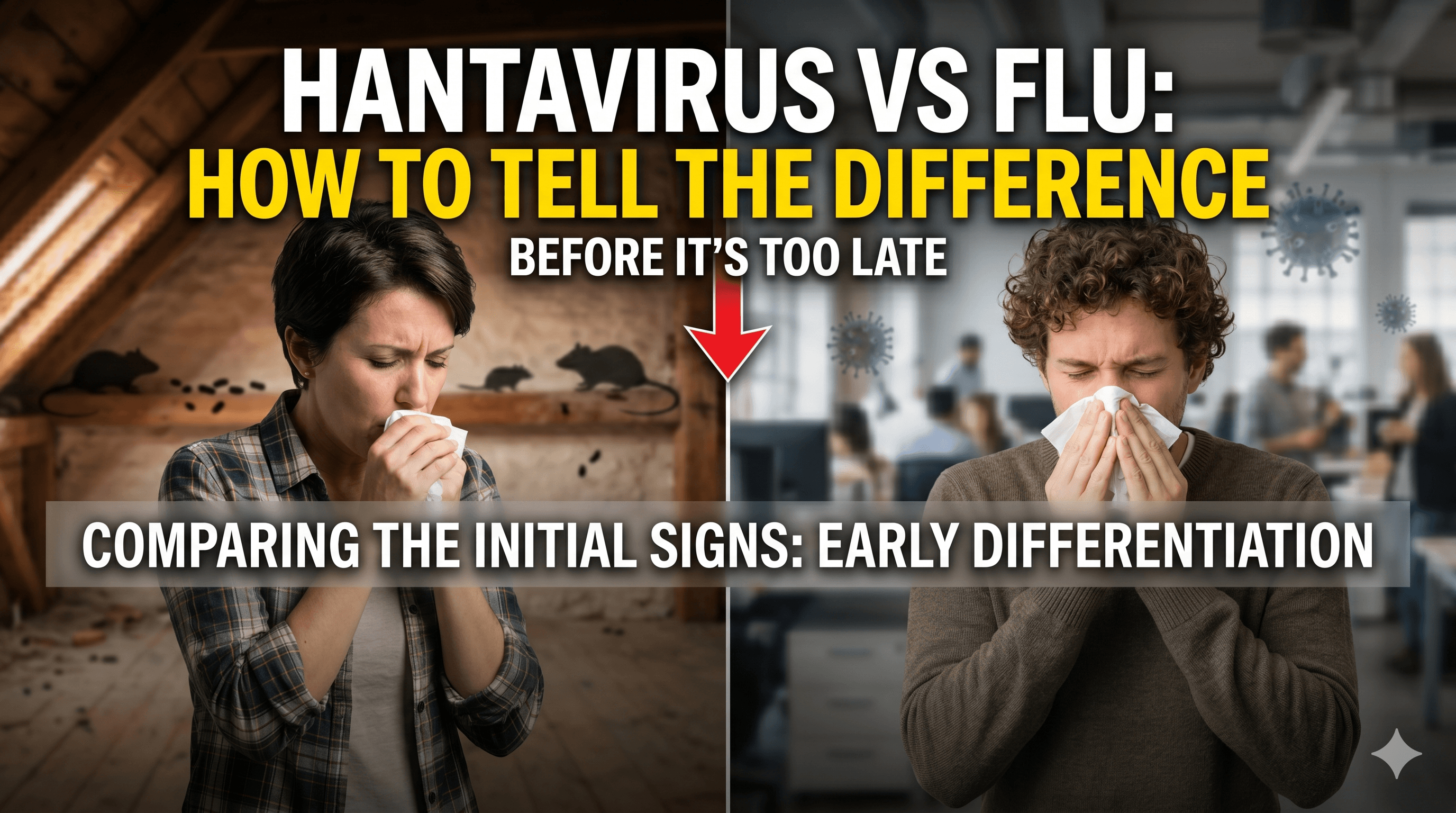
Hantavirus vs Flu: How to Tell the Difference Before It's Too Late
Both hantavirus and influenza start the same way - fever, chills, muscle aches, and fatigue. But one of them can kill you within 48 hours of the first breathing problem. Here is exactly how to tell them apart, and when to act fast.

Written by
Dr. Robert Hayes, MD
Infectious Disease Specialist · Zoonotic diseases, viral hemorrhagic fevers
Dr. Hayes is an infectious disease physician with more than a decade of experience treating severe viral and bacterial syndromes in hospital settings. His work focuses on zoonotic ...
Dr. Robert Hayes, MD · Doctor-reviewed outbreak intelligence
Medically reviewed by Dr. Daniel Reed, PhD, RNA viruses, hantavirus pathogenesis
Last updated: 2026-05-13 · Reading time: 10 min
Why They're So Often Confused
Hantavirus and influenza share a frustratingly similar early presentation. Both cause fever, muscle aches, fatigue, and headaches - the classic I-feel-terrible cluster that most people associate with seasonal flu. This overlap is not a coincidence: both viruses trigger a strong immune response in the body, and the early symptoms reflect that general inflammatory reaction, not organ-specific damage.
The confusion becomes dangerous because hantavirus has a fatality rate of up to 38% among people who develop respiratory symptoms - while most healthy adults recover from influenza within a week. Getting the diagnosis wrong, or waiting too long, can cost a patient their life.
Key Differences You Must Know
| Feature | Hantavirus (HPS) | Influenza |
|---|---|---|
| Sore throat | Rare or absent | Very common |
| Runny nose / congestion | Uncommon | Very common |
| Sneezing | Rare | Common |
| Early cough | Usually absent | Appears early, often day 1–2 |
| Muscle aches location | Thighs, hips, lower back | Generalized, all over |
| Shortness of breath | Appears suddenly after 4–10 days | Rare unless complicated |
| Breathing decline speed | Extremely rapid - hours | Gradual if at all |
| Rodent exposure | Almost always present | Not relevant |
| Person-to-person spread | No (except Andes virus) | Yes, highly contagious |
| Response to rest/fluids | Does not improve; worsens | Usually improves within days |
The most telling early clue is the absence of upper respiratory symptoms in hantavirus. A person with flu almost always has a runny nose or sore throat within the first two days. A person with early hantavirus typically does not.
The One Question That Changes Everything
Were you recently near rodents, rodent droppings, or a dusty, closed indoor space?
This single question is what separates a routine flu workup from an urgent hantavirus investigation. If the answer is yes - and the patient has fever, fatigue, and severe muscle aches - hantavirus must be considered immediately, regardless of how mild the symptoms seem.
- Cleaning a cabin or storage shed that was closed over winter
- Sweeping a barn, basement, or garage with rodent droppings
- Sleeping in rodent-infested structures
- Working in grain storage, farms, or open rural shelters
- Camping in areas with high rodent activity
Incubation Period: A Critical Difference
| Disease | Typical Incubation | Range |
|---|---|---|
| Influenza | 1–4 days | Up to 5 days |
| Hantavirus (HPS) | 2–3 weeks | 1–8 weeks |
| Andes virus | ~2–3 weeks | 4–42 days |
The long incubation window for hantavirus is a major reason patients and doctors miss the connection. Someone who cleaned a rodent-infested garage three weeks ago may never link that activity to their current flu illness.
How Each Disease Progresses
Influenza progression
- Days 1–2: Sudden fever, aches, fatigue
- Days 3–5: Peak symptoms - cough, congestion, sore throat
- Days 5–7: Gradual improvement in most healthy adults
- Week 2: Full recovery, barring complications
Hantavirus progression
- Days 1–7: Fever, fatigue, muscle aches - looks like flu
- Brief false improvement: Some patients feel slightly better for 12–24 hours
- Days 4–10: Sudden cough, breathlessness, chest tightness
- Hours later: Pulmonary edema, respiratory failure, shock
Severity and Fatality Risk
| Metric | Hantavirus (HPS) | Influenza |
|---|---|---|
| Overall fatality rate | Up to 38% | ~0.1–0.2% |
| ICU admission rate | Very high | Low to moderate |
| Approved antiviral treatment | None | Yes (oseltamivir/Tamiflu) |
| Vaccine available | No | Yes |
| Risk groups | All ages; rural/outdoor exposure | Elderly, immunocompromised |
Hantavirus is rare, but it carries an extraordinary case fatality rate once respiratory symptoms begin. Influenza kills primarily through secondary bacterial pneumonia in high-risk groups. With hantavirus, otherwise healthy young adults can deteriorate and die within days of onset.
Diagnosis: How Doctors Tell Them Apart
There is no rapid bedside test for hantavirus equivalent to the flu swab. Diagnosis relies on:
- Exposure history - the single most important factor
- Blood tests detecting hantavirus-specific IgM antibodies or viral RNA
- Chest X-ray or CT - bilateral pulmonary infiltrates suggest HPS
- CBC showing thrombocytopenia and elevated hematocrit
A negative hantavirus test before 72 hours of symptoms is unreliable. If clinical suspicion is high, repeat testing is required - do not use an early negative result to rule out hantavirus.
Treatment Differences
| Treatment | Hantavirus | Influenza |
|---|---|---|
| Antiviral drug | None approved | Oseltamivir (Tamiflu), within 48h |
| ICU care | Often required | Rarely required |
| Mechanical ventilation | Frequently needed | Rarely needed |
| Supplemental oxygen | Essential in late stage | Supportive only if needed |
| ECMO | Used in severe HPS cases | Not typically used |
The absence of targeted antiviral treatment for hantavirus makes early recognition critical. Patients admitted to the ICU early - before full respiratory collapse - have significantly better outcomes.
When to Go to the Emergency Room
For hantavirus suspicion - go immediately if you have fever + muscle aches + any history of rodent exposure, or you develop shortness of breath or chest tightness after flu-like symptoms.
The bottom line: with hantavirus, there is no safe wait-and-see window once breathing symptoms appear.
2026 Outbreak Context
In May 2026, the CDC issued a Health Alert Network notice about a multi-country Andes virus cluster linked to the cruise ship M/V Hondius. At least one American tested positive for hantavirus following the voyage. The CDC assessed the risk of wider spread within the US as extremely low, but clinicians were advised to consider potential imported cases in patients with relevant travel history and compatible symptoms.
FAQ
Can you get hantavirus from a person with flu symptoms?
No. Hantavirus is not spread person-to-person, except Andes virus in rare circumstances.
Does hantavirus respond to flu medication like Tamiflu?
No. Oseltamivir is effective against influenza but has no proven effect on hantavirus.
Can a flu shot protect against hantavirus?
No. The influenza vaccine provides no protection against hantavirus.
What is the fastest way to tell if it is hantavirus and not flu?
Ask about rodent exposure and watch for the absence of upper respiratory symptoms.
Sources & References
- CDC - About Hantavirus
- CDC HAN - 2026 Multi-country Hantavirus Cluster
- Mayo Clinic - Hantavirus Pulmonary Syndrome
- American Lung Association - Hantavirus Q&A
Last reviewed: 2026-05-13 by Dr. Daniel Reed, PhD
Found an error? Report it here